Access Is the Advantage: Why Healthy Snacks at Work Drive Performance, Culture, and Retention
Healthy snacks at work are often framed as a soft perk, something nice to have, a signal of a modern office that sits somewhere between free coffee and casual Fridays. But that framing undersells what is actually happening. The data points in a different direction. It suggests that workplace nutrition is not a surface-level benefit but an operational lever, one that quietly influences how people think, how they feel, how they collaborate, and ultimately how they perform. Once you start looking at it through that lens, the conversation changes. Snacks are no longer about generosity or aesthetics. They become part of the infrastructure of work itself.
For years, companies have invested heavily in tools that promise productivity gains, from software to workflows to management frameworks. Yet one of the most consistent and measurable drivers of performance is often overlooked, sitting in the kitchen, in the break room, or sometimes nowhere at all. Workplace nutrition programs have been linked to productivity gains of up to 16 percent, which is not a marginal improvement but the kind of lift companies spend millions trying to achieve through systems and strategy.[1] At the same time, healthier eating habits are associated with lower absenteeism and reduced burnout, outcomes that directly impact output, continuity, and team morale.[1] When people feel better physically, they show up more consistently and engage more fully. Employees themselves recognize this connection. Around 53 percent say they feel more productive when good food is available onsite,[2] and more than 80 percent believe office snacks strengthen teamwork and collaboration.[3] Taken together, these numbers tell a clear story. Food at work is not just about convenience. It shapes how people experience their day.
Most organizations measure time, but far fewer measure energy, even though energy is what determines how that time is actually used. An employee can sit at their desk for eight hours, but the quality of those hours fluctuates constantly through peaks of focus and dips in attention. Much of this variation is tied to one simple factor: what they eat and when. The typical workday is filled with small decisions, meetings stacked back to back, deadlines that compress time, and in that environment food choices are rarely intentional. They are reactive. Whatever is fastest, closest, or easiest tends to win. This is where access becomes critical. When unhealthy options are the most accessible, energy becomes volatile, with quick spikes followed by crashes and a mid-afternoon slowdown that feels inevitable but is largely preventable. Over time, that pattern compounds into reduced output and mental fatigue. When healthier options are readily available, something shifts. Energy stabilizes, focus extends, and the workday feels less like a series of sprints and more like a steady rhythm. This is not about forcing people into rigid dietary structures. It is about removing friction from better choices.
There is a tendency to overestimate the role of intention in decision-making, assuming people will choose what is best for them if they know better. In reality, behaviour is shaped far more by environment than by knowledge. In the workplace, this plays out in subtle but powerful ways. If a team has to leave the office, wait in line, and spend money to access healthy food, it becomes an occasional choice rather than a default one. If the only immediate options are processed snacks or sugar-heavy drinks, those become the norm regardless of preference. When healthier snacks are placed directly within reach, the equation changes. There is no extra time, no added effort, no disruption to the flow of the day, and that is what drives consistent behaviour. Employees are not thinking about nutrition as a long-term strategy in the middle of a busy afternoon. They are responding to what is in front of them. By shaping that environment, companies influence outcomes without needing to mandate anything. It is a quiet intervention, but an effective one.
There is a shared understanding across most workplaces that the afternoon slump is simply part of the day, that energy dips, focus fades, meetings feel heavier, and work slows down. It is often accepted as unavoidable. But much of that experience is tied to nutrition patterns. High-sugar snacks or carb-heavy lunches lead to rapid increases in blood sugar followed by equally rapid declines, resulting in fatigue, irritability, and reduced cognitive performance. When healthier options are available, that cycle can be moderated. Snacks that combine protein, fiber, and healthy fats provide more sustained energy, while hydration, often overlooked, plays an equally important role. The impact is not dramatic in a single moment but cumulative, with fewer dips, more consistency, and a workday that feels manageable from start to finish. Over weeks and months, that consistency translates into better output and less strain on employees.
There is another layer to workplace snacks that is less quantitative but equally important, and that is culture. Culture is often discussed in broad terms such as mission statements, values, and leadership styles, but in practice it is built through everyday interactions, small repeated moments that shape how people feel about where they work. Shared spaces play a central role in this, whether it is the kitchen, the coffee station, or the area where people naturally pause between tasks. These are the places where informal conversations happen and where relationships are built outside of structured meetings. A well-designed snack program supports these interactions by creating a reason for people to step away from their desks, cross paths with colleagues they might not otherwise engage with, and have conversations that are not tied to immediate deliverables. More than 80 percent of employees believe office snacks help strengthen teamwork and collaboration, and that belief is rooted in these everyday moments.[3] It is not about the food itself but about what the presence of that food enables.
Every decision a company makes sends a signal, some explicit and others subtle. Providing healthy snacks is one of those subtle signals. It communicates that employee wellbeing is not an afterthought but something considered as part of how the organization operates on a daily basis. This matters more than it might seem because employees pay attention to what is prioritized, not what is stated but what is consistently delivered. When wellbeing is embedded into the environment, it reinforces trust and shows alignment between words and actions. This has implications for retention. People are more likely to stay in environments where they feel supported and where the company invests in their experience in tangible ways. Snacks alone do not determine retention, but they contribute to the overall perception of the workplace and become part of a broader ecosystem that shapes how employees evaluate their role and their employer.
From a cost perspective, snack programs are relatively modest compared to other workplace initiatives, yet the return can be significant when viewed through the right lens. A 16 percent increase in productivity, even if only partially realized, represents a substantial gain. Reduced absenteeism lowers operational disruption, and improved morale can enhance collaboration while reducing turnover costs. These outcomes are difficult to attribute to a single factor, but nutrition plays a role in all of them. What makes snack programs particularly effective is their consistency. They operate every day and influence behaviour continuously. Unlike one-time initiatives, their impact accumulates over time, making them a stable and scalable investment.
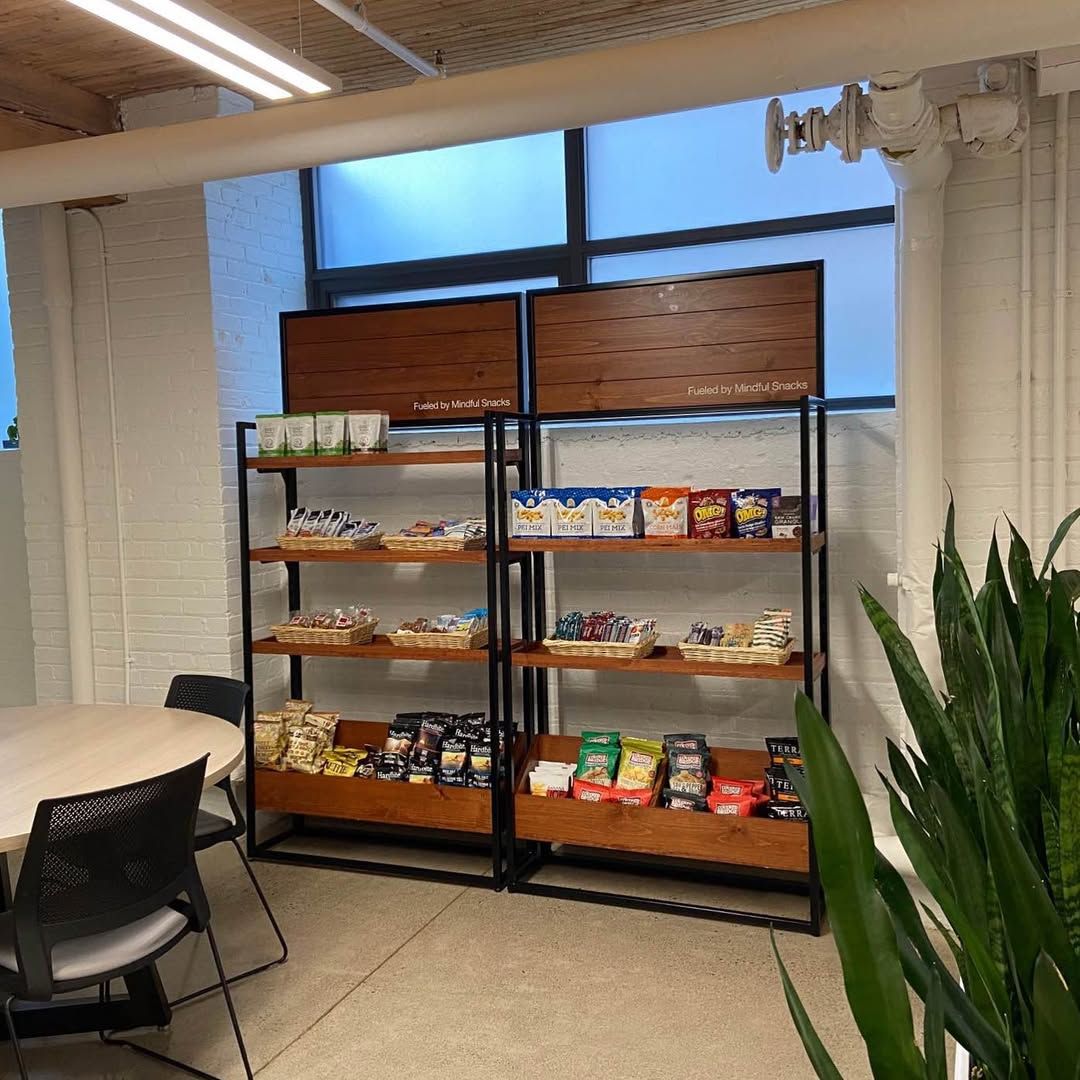
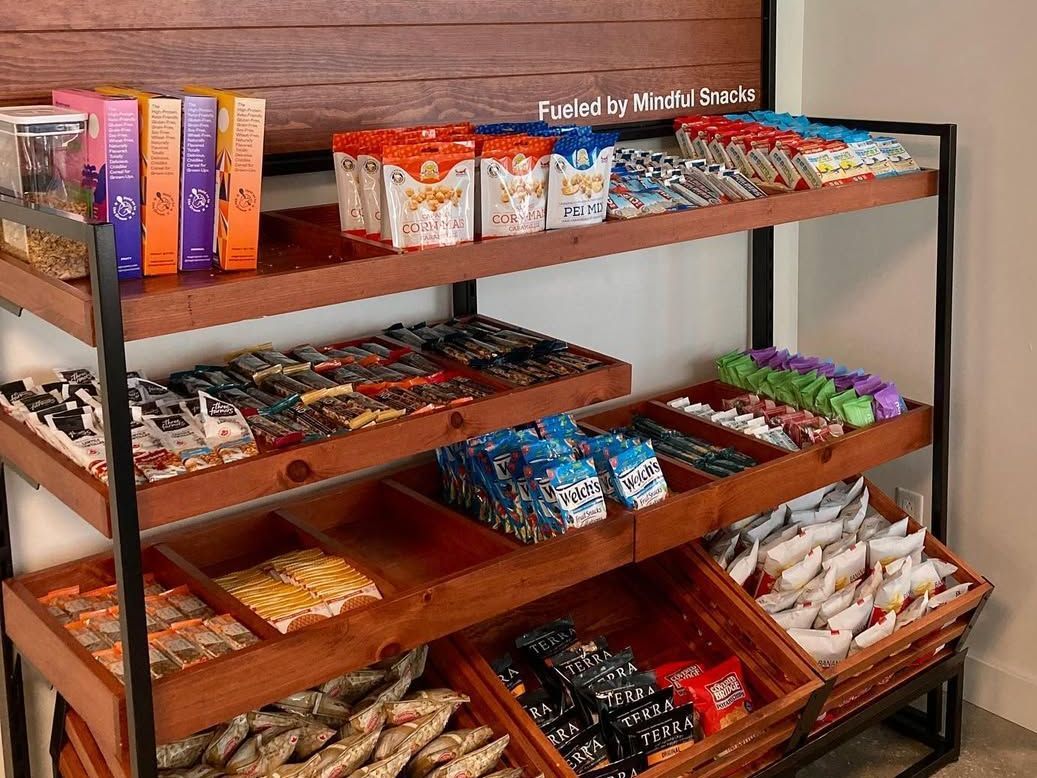
Not all snack programs deliver the same results, and design matters. Variety is important because employees have different preferences and dietary needs, and offering a range of options increases the likelihood that healthier choices are actually chosen. Placement is equally critical, as snacks should be visible and easy to access because if they are hidden or inconvenient, their impact diminishes. Quality also plays a role, as employees can distinguish between thoughtful selections and token offerings. The goal is not to provide the cheapest options available but to curate choices that people genuinely want. Consistency is equally important because a well-stocked space one day and an empty one the next undermines the entire system. Reliability builds trust and reinforces behaviour.
While snacks are a focal point, they are part of a larger conversation about how workplaces support employees. Hydration, meal options, flexible schedules, and overall environment all contribute to wellbeing, and snacks are often the most visible and easiest to implement, which is why they serve as a starting point. The underlying principle extends further by reducing friction, supporting better choices, and aligning the environment with desired outcomes. When companies adopt this mindset, they begin to see opportunities across the entire employee experience.
As work continues to evolve, expectations placed on employers are changing, with employees looking for environments that support not just their output but their overall experience. This includes how they eat, how they rest, and how they interact throughout the day. Healthy snack programs fit naturally into this shift because they are simple, tangible, and effective, requiring no complex adoption processes or extensive training while integrating seamlessly into existing workflows. At the same time, they align with broader trends around health, sustainability, and conscious consumption. Companies that recognise this early have an advantage, as they are able to build environments that support performance in a more holistic way.
The most important insight is straightforward. Access matters more than intention. Employees do not need more reminders to eat well. They need environments that make it easy to do so. When healthier options are within reach, behaviour follows naturally, leading to steadier energy levels, better focus, and more consistent performance. It also creates space for connection, for culture to develop in an organic way, and for employees to feel that their wellbeing is genuinely supported. In the end, healthy snacks are not just about food. They are about how work is experienced on a daily basis, and when that experience improves, everything else tends to follow.
Sources:
[1] https://www.icebergmanagement.ca/en/gestion-de-la-performance/nutrition-workplace-productivity/
[2] why-workplace-well-being-programs-dont-achieve-better-outcomes
[3] https://www.ilo.org/resource/news/poor-workplace-nutrition-hits-workers-health-and-productivity-says-new-ilo
Recent Posts